

Team Effectiveness
Team Effectiveness That Delivers Measurable Business Improvement
Team effectiveness is frequently misunderstood. Many organisations maintain high levels of activity, yet fail to achieve meaningful business outcomes. Output is visible. Impact is not.
This creates a performance gap. Teams are busy but not aligned. Decisions are made but not embedded. Development takes place but does not translate into capability growth.
The distinction is critical. Performance reflects activity and output. Effectiveness reflects impact, outcomes and sustained progress. When team effectiveness is low, the business experiences reduced productivity, inconsistent execution and limited return on investment.
This is not a behavioural issue. It is a measurable business problem that requires structured diagnosis and targeted intervention.

How It Works
Team effectiveness must be understood as a driver of business performance, not an abstract concept. It sits at the intersection of conceptual capability, moral leadership and physical execution.
Most approaches fail because they focus on activity rather than outcomes. They introduce generic interventions without identifying the underlying issues. They prioritise engagement over measurable improvement.
BlueSky Experiences operates differently.
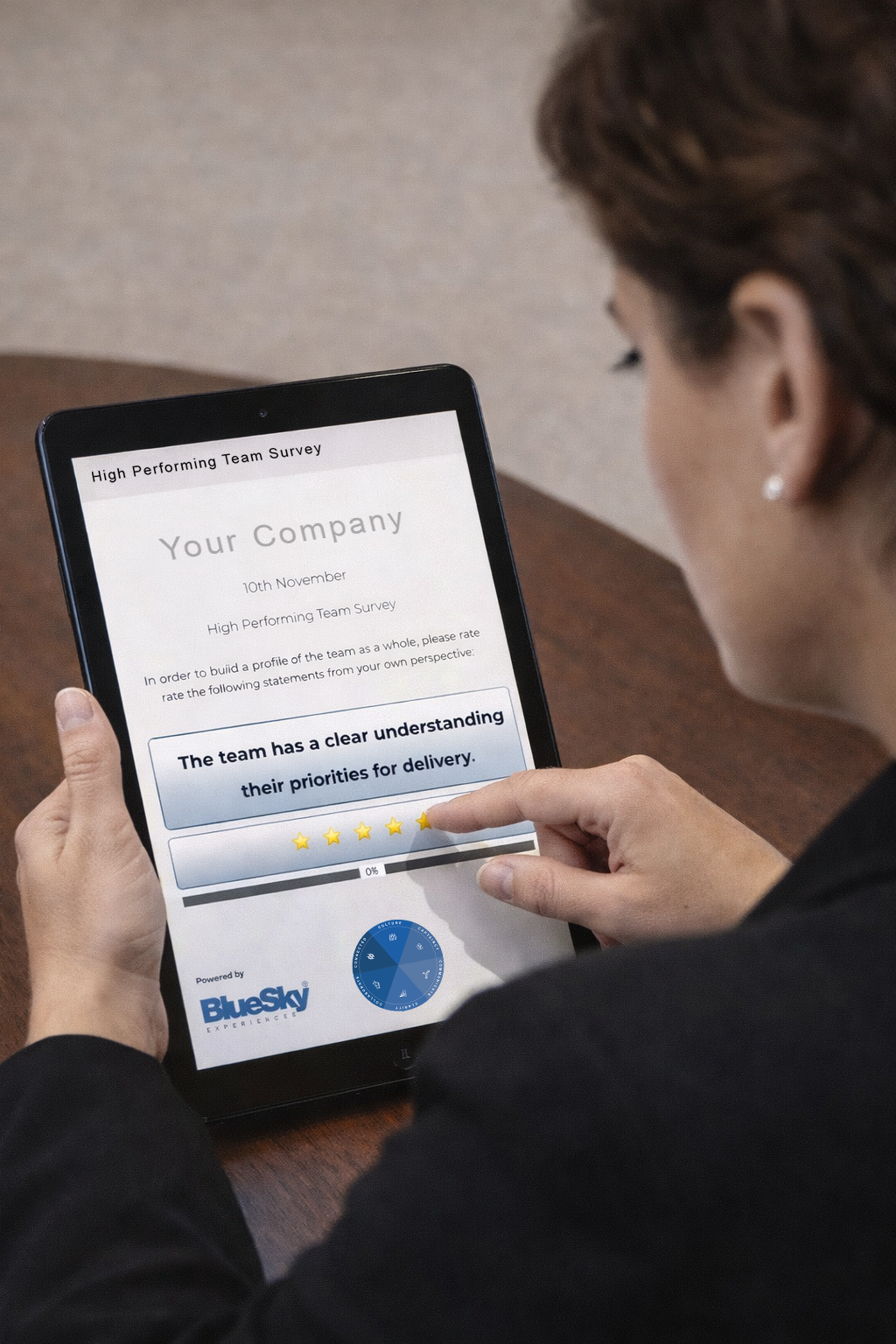
Team effectiveness is addressed through a diagnostic-led approach that identifies where effectiveness is being lost, why it is happening and what must change. Interventions are then designed with precision, aligned to business objectives and measured against defined outcomes.
This is not a programme. It is a structured pathway to improved performance and effectiveness.
-
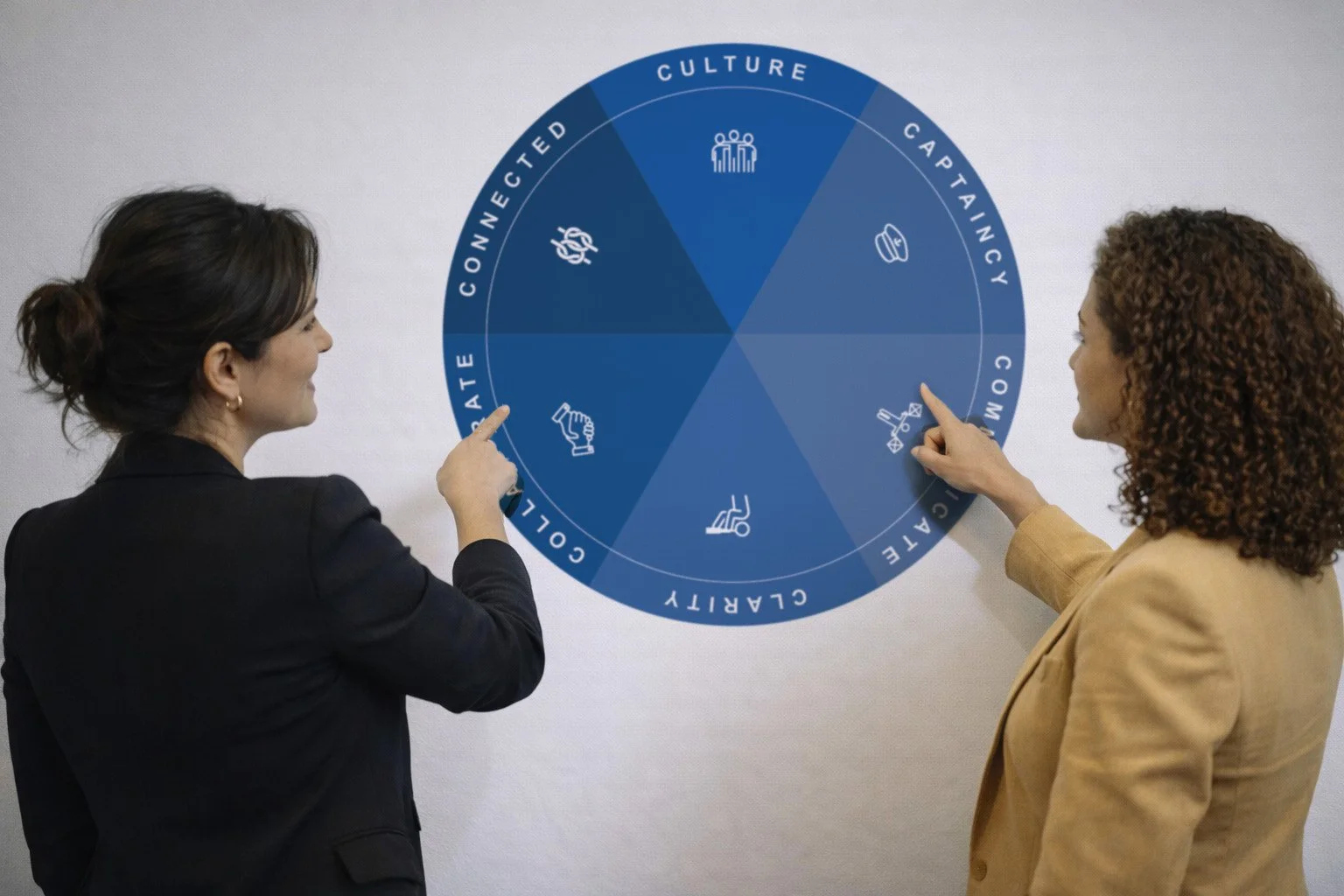
Within the High-Performance Pathway, the model strengthens the 6 Drivers of High-Performance:
Culture
Establishes consistent behaviours and standards that support a results-focused environment.Captaincy
Clarifies roles and expectations, strengthening accountability within teams.Communication
Improves how teams share, interpret and act on information.Clarity
Aligns teams around priorities, objectives and success measures.Collaboration
Strengthens how teams work together, reducing inefficiency and duplication.Connectedness
Improves how teams operate within wider systems, ensuring alignment across the organisation. -
Elements on the High-Performance Pathway are delivered as a structured, facilitated intervention:
Diagnostic in action
Observe how teams and leaders operate in real time, identifying behavioural patterns and performance gaps.Insight
Introduce the 6 Drivers of High-Performance to create a shared language for understanding performance.Intervention
Use experiential challenges to surface behaviours linked to performance outcomes.Reflection
Facilitated discussion connects experience to workplace behaviour and performance.Progression
Insights inform the other stages of the pathway, including team and leadership development and eventually team effectiveness. -
Improving team effectiveness delivers tangible business outcomes:
Increased alignment between strategy and execution
Improved decision-making and operational clarity
Measurable capability growth across teams and leaders
Stronger ownership, accountability and follow-through
Enhanced leadership impact and consistency
Sustainable improvements in performance and effectiveness
These outcomes are assessed against three criteria:
Output meets or exceeds client or stakeholder needs
The team grows in capability over time
Individuals develop through participation
This ensures that improvement is not temporary. It is sustained, measurable and directly linked to business performance.
-
The approach is grounded in structured methodology and measurable outcomes:
Diagnostic-led assessment aligned to the 6 Drivers of High-Performance and the resultant performance gains.
Quantitative baseline and post-intervention measurement
Integration of conceptual, moral and physical performance factors
Structured pathway from diagnosis to sustained improvement
Case studies and evidence demonstrate:
Measurable increases in team effectiveness scores
Improved delivery against business objectives
Observable behavioural and capability change
Highland Council
Facilitated performance workshops, feedback, alignment, team purpose and behavioural patterns.
5 March 2026
SSCL/TBS
A programme focussed on resilience, accountability, emotional awareness, ownership, career mindsets and reflection
-
“We do not have time for this”
The process is designed to integrate with operational demands. Diagnostics provide rapid insight, allowing targeted intervention rather than prolonged disruption.“This will not deliver measurable impact”
Every stage is structured around measurement. Baselines, defined metrics and post-intervention comparison ensure clear evidence of improvement.“We have done this before and it did not work”
Previous approaches often lacked diagnosis and targeting. This approach begins with identifying the specific performance gap, ensuring relevance and measurable return.“We can handle this internally”
Internal approaches often lack objectivity and structured measurement. External diagnostic insight provides clarity, benchmarking and credibility for decision-making. -
What is team effectiveness in a business context?
Team effectiveness is the ability of a team to deliver outcomes that meet stakeholder needs, grow in capability over time and develop individuals through participation. It is measured through impact, not activity.How is team effectiveness different from team performance?
Performance reflects output and activity. Effectiveness reflects impact, outcomes and sustained progress. High-performing teams are not always effective.How do you measure team effectiveness?
Measurement includes baseline diagnostics, performance indicators, capability assessments and post-intervention comparison to demonstrate measurable improvement.How quickly can team effectiveness improve?
Initial insight is delivered rapidly through diagnostics. Measurable improvement depends on the scale of the performance gap and the targeted interventions applied.What makes this approach different from traditional team development?
It is diagnostic-led, targeted and measurable. Interventions are based on identified performance gaps, not generic development activity.Is this suitable for senior leadership teams?
Yes. The approach is designed for any team, in any sector and at any level.
STEP ONTO THE PATHWAY
Start with insight, not assumption.
Engage in a Team Effectiveness Audit to identify performance gaps, establish a measurable baseline and define a clear pathway to improvement.
Request a consultation to explore how your team effectiveness is impacting business performance and where targeted intervention will deliver the greatest return.